

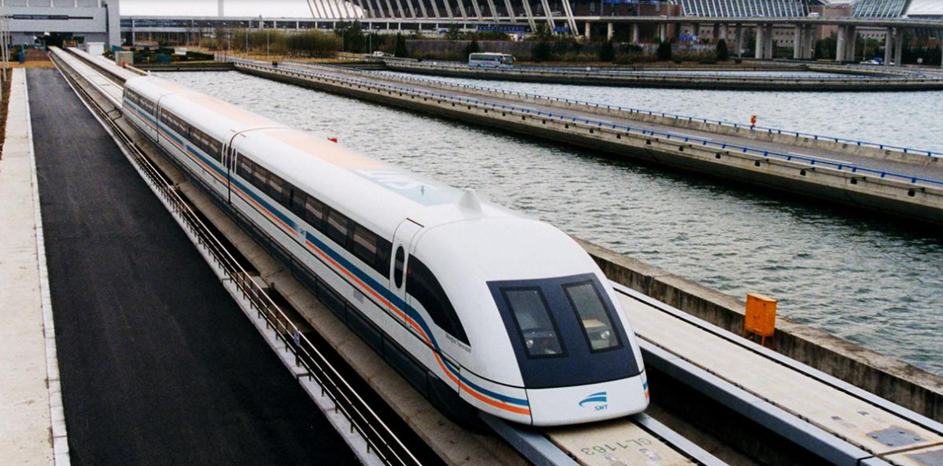
You shared the basics of how Maglev (Magnetic Levitation) dumps the old wheel-and-rail hardware for pure electromagnetic force. It’s literally refactoring physics—overriding the weakest fundamental force (gravity) with the much stronger electromagnetic force to lift a 500-tonne train.
Here are some insane backend details and recent updates I pulled to level up your post:
- The Two Architectures (EMS vs EDS):
- EMS (Electromagnetic Suspension): The train has arms that wrap under the steel track. Electromagnets on the arms pull up toward the guideway, levitating the train about 10mm in the air.
- EDS (Electrodynamic Suspension): Uses super-cooled, superconducting magnets to create a repulsive force that pushes the train away from the track, levitating it up to 10cm.
- Propulsion Logic: Once it’s floating, electrified coils in the guideway walls constantly alternate their polarity. These rapidly changing magnetic fields pull the train from the front and push it from the back. It’s basically a massive unrolled electric motor.
- Production Records: Japan’s L0 Series hit 603 km/h in testing, but China is pushing the limits hard. They just set a record accelerating a test vehicle to 700 km/h in 2 seconds and are building out a low-vacuum tube maglev aiming for a massive 1,000 km/h top speed.
- The Trade-off: Zero rolling friction means almost zero mechanical wear and tear (no moving parts to break). The catch? The infrastructure cost for the specialized guideways and magnetic coils is insanely high.